Software engineered for modern logistics organizations.
Logistics is a coordination problem at speed — shipments, fleets, warehouses, and customers all moving at once. We build the tracking systems, dashboards, and automation that give operators a live picture and cut the manual work between each hand-off.
How logistics organizations actually operate
A logistics operation runs on continuous hand-offs — booking to dispatch, transit to warehouse, warehouse to delivery — each a point where information can be lost or delayed. When systems don't share a live view, operators chase status by phone and customers are left guessing.
Digital transformation here is about real-time visibility and automation: connecting tracking, fleet, and warehouse data so the whole chain is observable, and removing the manual updates that slow every hand-off. Most operators don't need to rip out core systems; they need them connected and surfaced clearly.
We focus on operational software that matches the pace of the work — live tracking, fleet and warehouse dashboards, and automation of the repetitive status and documentation steps that consume dispatcher and back-office time.
Where Logistics teams lose time
The operational friction we hear about most — and that well-built software is designed to remove.
Limited shipment visibility
Status is scattered across systems and calls, so operators and customers can't see where things are in real time.
Manual status updates
Dispatchers spend hours relaying updates by phone and email that automation could surface instantly.
Disconnected fleet and warehouse data
Fleet, warehouse, and order systems don't share data, so planning is reactive and hand-offs stall.
Poor operational reporting
On-time rates, utilization, and cost per shipment are assembled by hand, hiding the trends that matter.
Inefficient routing and scheduling
Manual planning leaves capacity underused and increases fuel, overtime, and late-delivery costs.
Aging back-office systems
Legacy tools can't integrate with modern tracking or customer expectations, holding the operation back.
3 solutions, applied to Logistics
The same core areas we focus on everywhere, shaped around the way your organization actually works.
Software the people you serve interact with
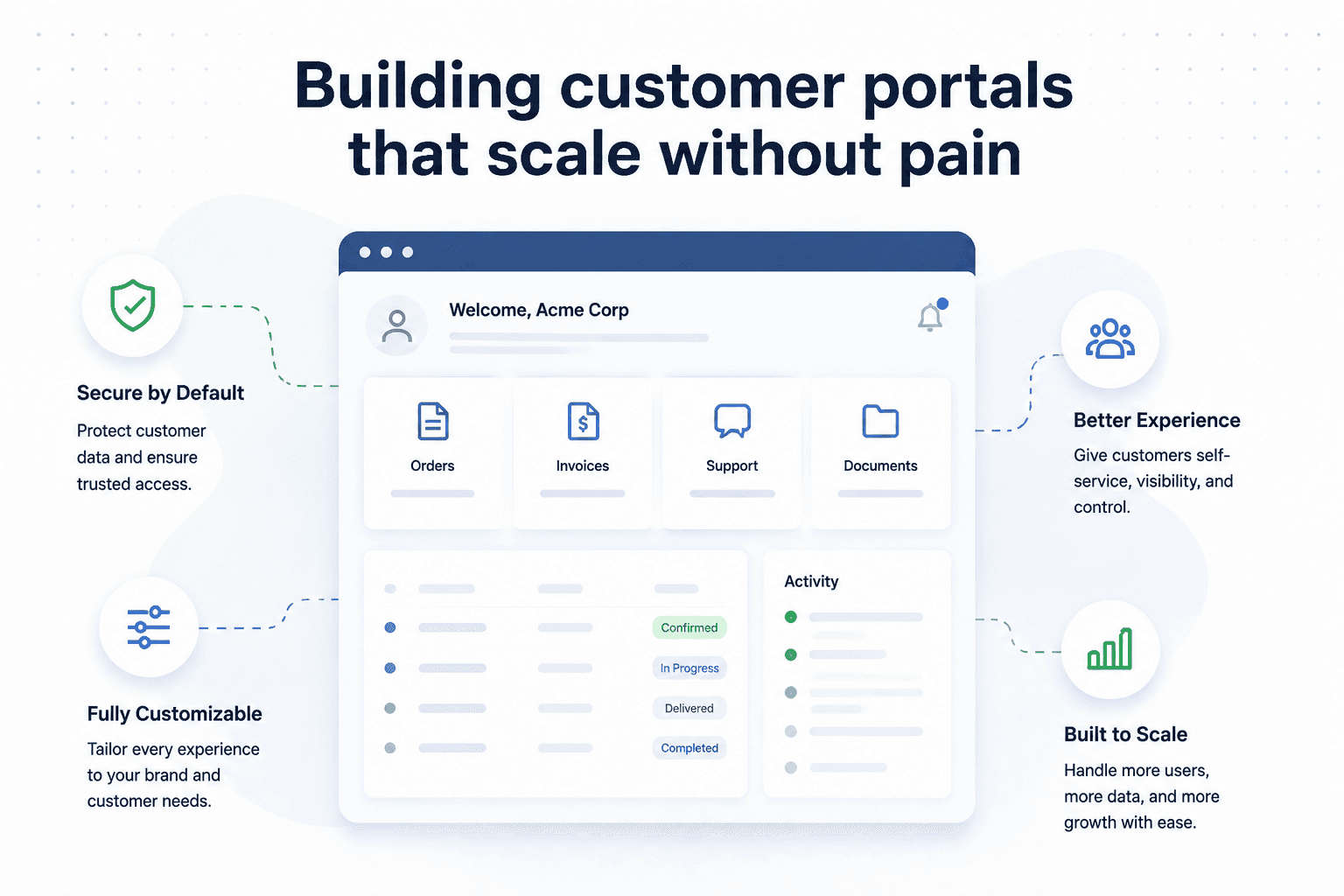
- Customer tracking portals that show live shipment status and documents, cutting the calls that flood dispatch.
- Fleet and dispatch dashboards that give operators a single live view of vehicles, loads, and exceptions.
- Driver and warehouse web tools built for fast, mobile use in the field and on the dock.
Systems that run your operations
- Integrations that unite tracking, fleet, warehouse, and order data into one operational source of truth.
- Automation for status updates, documentation, and exception alerts that removes repetitive dispatcher work.
- Reporting pipelines that turn operational data into live on-time, utilization, and cost dashboards.
Apps the people you serve carry with them
- A dedicated driver app for routes, proof-of-delivery, and status updates — built for one-handed use in a moving vehicle.
- Offline-ready scanning and confirmation that keeps working in warehouses and low-signal areas, syncing once reconnected.
- Push notifications that put delay and exception alerts directly in a driver's or dispatcher's pocket, not buried in email.
Software shaped for Logistics
Examples of what we could build for organizations like yours — starting points, not a fixed catalog. Every system is designed around your actual workflow.
Shipment Tracking System
Live, end-to-end shipment visibility for operators and customers, with automated status and alerts.
Fleet Management Dashboard
A single view of vehicles, loads, and exceptions that supports better routing and utilization.
Warehouse Portal
Receiving, picking, and dispatch workflows built for speed on the dock and synced with orders.
Customer Tracking Portal
Self-service status and documents that reduce inbound calls and improve the customer experience.
Workflow Automation
Automated status updates, documentation, and exception handling across every hand-off.
Operations Reporting
Live on-time, utilization, and cost-per-shipment dashboards drawn from connected systems.
What better software makes possible
The outcomes that make the investment worth it — not features, but the operational value they create.
Real-time visibility
A live view across shipments, fleet, and warehouse replaces status chasing by phone and email.
Less manual coordination
Automation handles routine status updates and documentation, freeing dispatchers for real exceptions.
Better customer experience
Self-service tracking cuts inbound calls and gives customers the transparency they now expect.
Reliable integrations
Connected systems keep one operational source of truth, ending reconciliation between tools.
Faster decisions
Live performance dashboards let managers act on current on-time and utilization data.
Scalable operations
Flexible architecture absorbs new routes, depots, and partners without disruptive change.
A steady engineering partner for Logistics
What working with us actually feels like — the principles behind every system we build.
Business-first thinking
We start from the operational problem and the outcome you need, not a technology we want to sell. The stack follows the goal.
Long-term maintainability
We write software your team — or a future team — can understand and extend. No clever shortcuts that become tomorrow's liability.
Modern engineering
Proven, current tools and disciplined practices: typed code, tests where they matter, and reviews that keep quality high.
Scalable architecture
Systems designed to grow with you — more users, more data, more integrations — without a rebuild every time you succeed.
A partnership approach
We stay close throughout: transparent progress, honest trade-offs, and a genuine interest in your operations, not just the ticket.
Further reading
Practical articles on building the kinds of software this industry relies on.
Questions we hear from this sector
Straight answers to the things worth knowing before we start.
Let's talk about your logistics operations
Tell us where the friction is in your day-to-day work. We'll help you shape the right approach and give you a clear path forward — no pressure, just a conversation.